
Modern Demolition Is More Than Material Removal
Demolition and recycling projects involve much more than taking structures down. Contractors must manage dust, maintain safe working conditions, separate materials efficiently, recover valuable materials, and keep worksites clean and controlled throughout the work. The International Labour Organization (ILO) notes in its 2022 revised Code of Practice on safety and health in construction that demolition planning should consider the potential for safe reuse, recycling, and other material recovery, and that water spraying may be used where necessary to help control dust. These priorities make practical demolition and recycling solutions increasingly relevant to modern worksites.
What Matters Most on a Modern Demolition and Recycling Site?
- Control dust where it is generated – apply targeted dust control close to the source while avoiding unnecessary wetting of the wider work area.
- Separate lightweight materials during the work – use machines to separate as much material as possible during the process, reducing manual collection tasks and keeping material streams easier to manage.
- Recover ferrous metal efficiently – collect and sort metal directly with the carrier machine.
- Make more use of existing equipment – integrate additional functions into machines and processes already doing the work.
- Keep the worksite and machines cleaner – reduce dust and debris buildup on machines and site surfaces, making maintenance and cleanup easier.
Dust Control Solutions for Demolition Sites
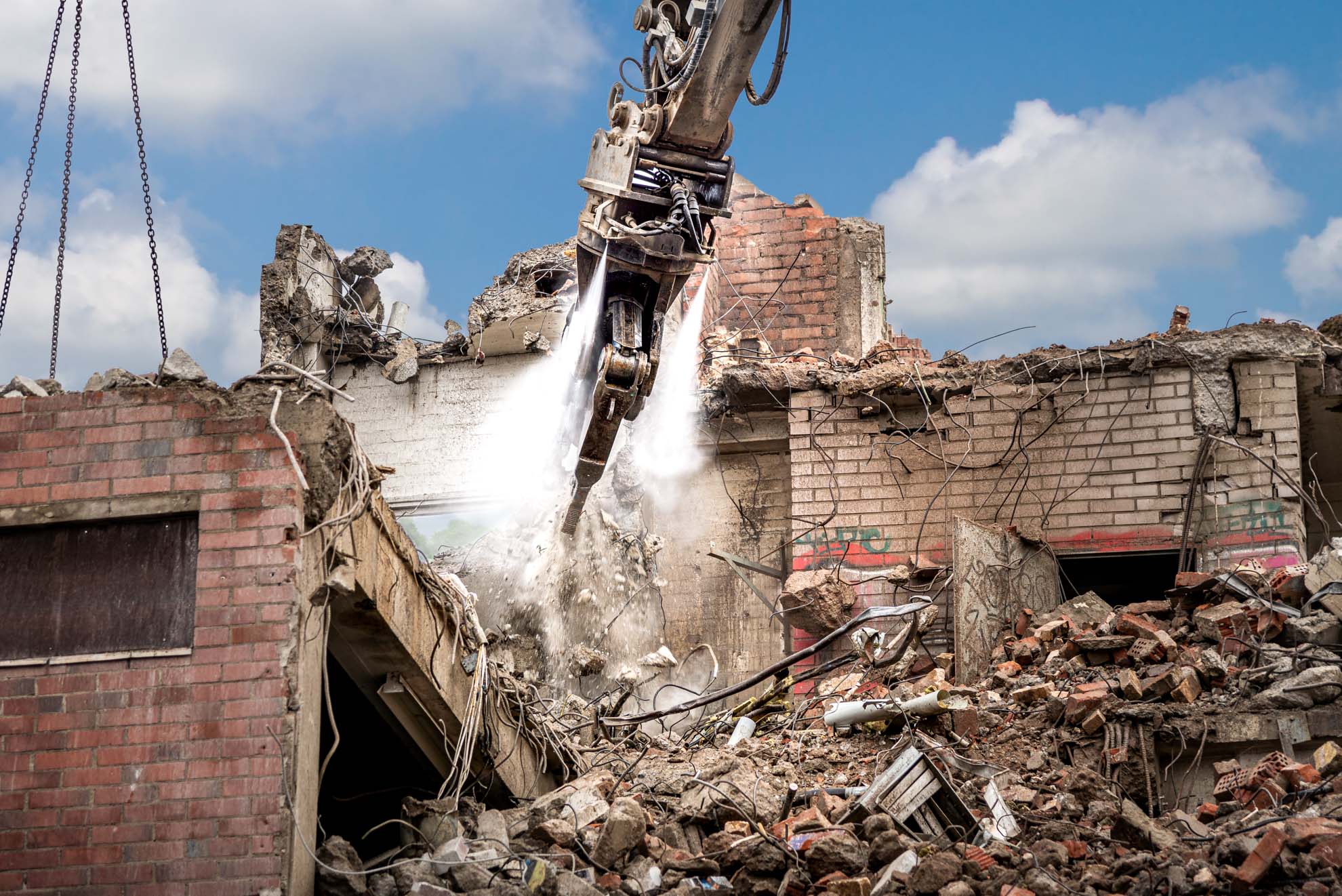
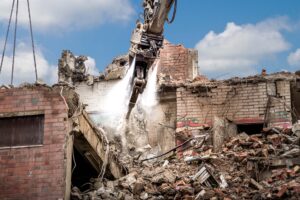
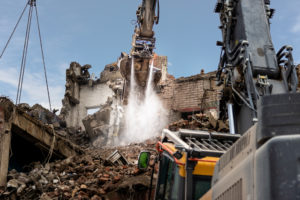
Dust can reduce visibility, affect working conditions, spread beyond the immediate work area, and accumulate on machines and in the surrounding environment. For targeted dust control, suppression should be applied as close as possible to where the dust is generated. DYNASET HPW-DUST and EPW-DUST High Pressure Dust Suppression Systems produce a fine high-pressure water mist that can be directed to specific dust sources. The small droplet size helps the water mist capture dust particles effectively, while precise application keeps water consumption low.
The right power source depends on the machine and application:
- HPW-DUST uses the carrier machine’s hydraulic power.
- EPW-DUST uses electricity and is available in AC- and DC-powered versions.
Because the nozzles are integrated into a machine, attachment, or process, dust control can operate alongside the actual work. Targeted application also helps avoid unnecessary wetting of the wider work area.
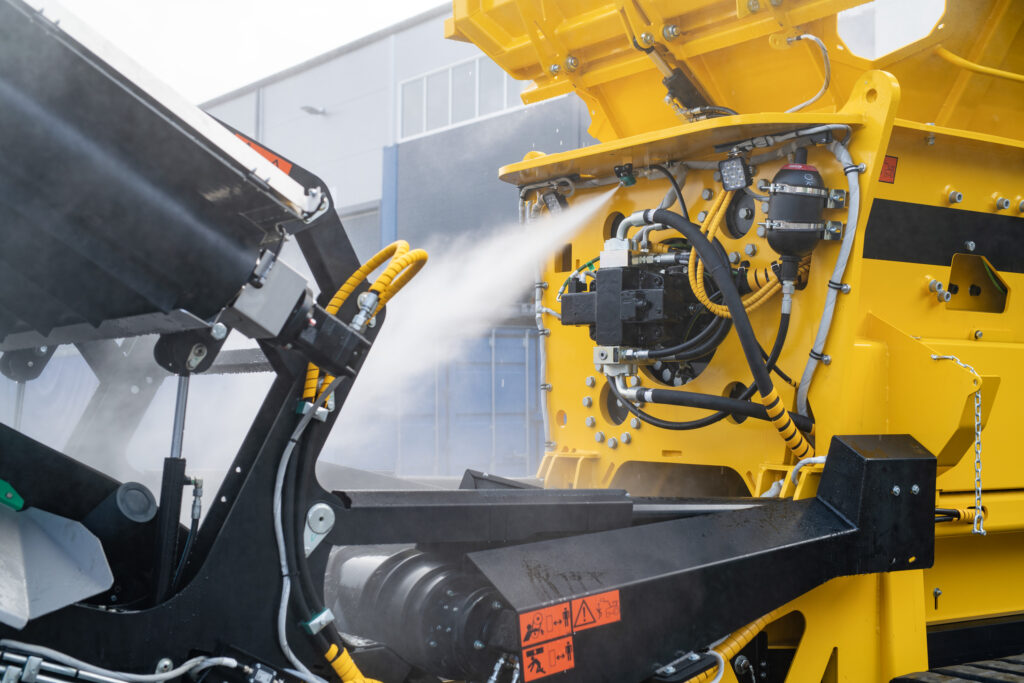
A current example is the TANA Hammerhead ET and EPW-DUST integration, where dust suppression was built into an electric waste shredder and water mist was applied both at the shredding process and at a material transfer point. In demolition applications, high-pressure dust suppression can be integrated directly into the machine to target dust close to where it is generated while avoiding unnecessary wetting of the surrounding area.
Material Separation and Site Cleanliness in Demolition Work
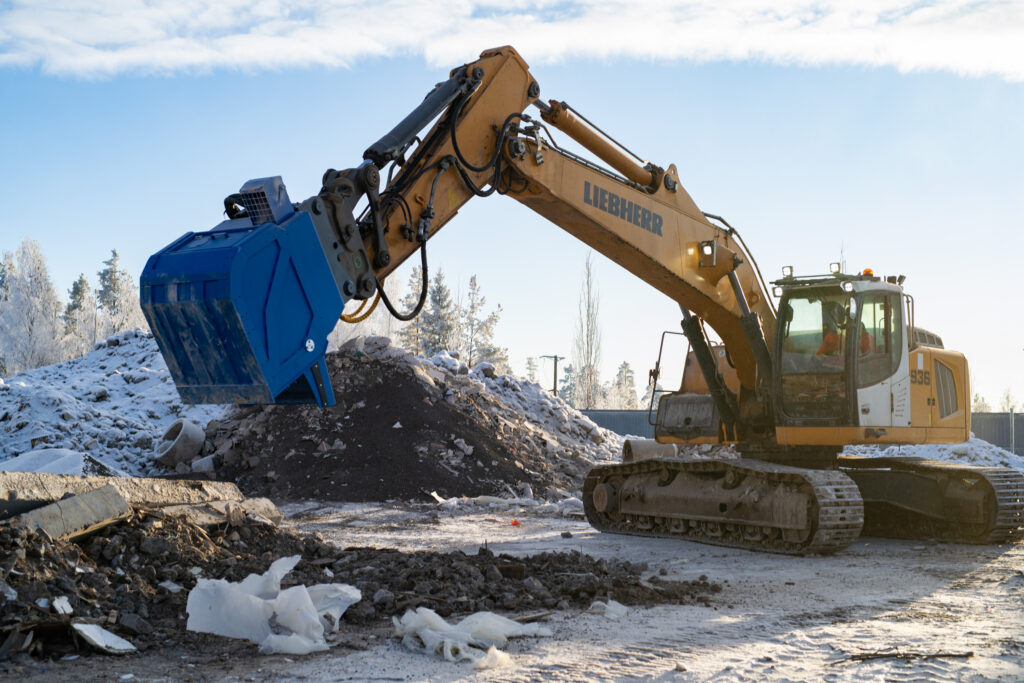
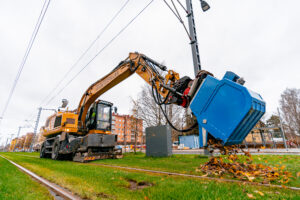
Efficient recycling depends on keeping different material streams separate as early as practical. Demolition sites often contain lightweight materials such as plastics, insulation, paper, wood fragments, and light expanded clay aggregate (LECA) that can be difficult to collect with conventional buckets or grabs. DYNASET HRVB and HRVB-HD Hydraulic Recycling Vacuum Buckets use the carrier machine’s hydraulics to create vacuum power for collecting light materials. This makes it possible to separate materials and clean the worksite during normal machine operation, reducing the need for separate manual collection tasks and supporting more efficient sorting.
The Mevaset demolition case illustrates how the HRVB can be used to separate small and lightweight demolition materials that are difficult to collect with conventional attachments. By separating these materials during the work, the HRVB helps prevent recoverable materials from ending up in mixed waste. This supports cleaner material streams, reduces unnecessary manual collection, and makes sorting more efficient on site.
Ferrous Metal Recovery on Demolition and Recycling Sites
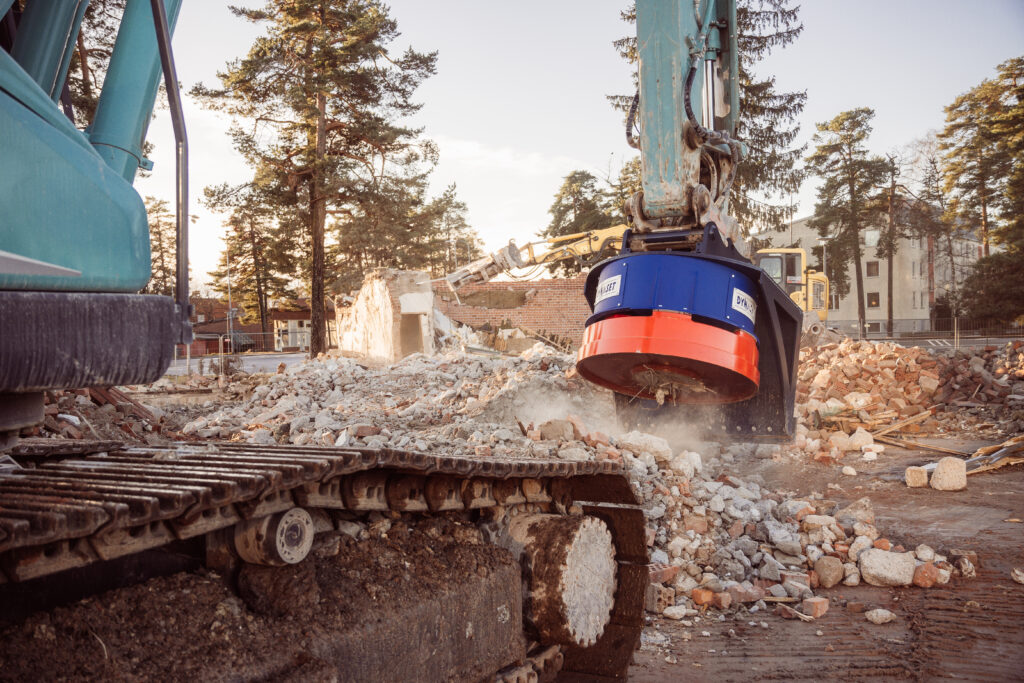
Ferrous metal is another important material stream in demolition and recycling. When it is collected separately from mixed demolition material, it can be directed more efficiently to downstream handling and recycling. DYNASET HMAG PRO Hydraulic Magnets and HMG PRO Hydraulic Magnet Generators with MAG Lifting Magnets enable operators to collect, sort, and move ferrous material directly with the carrier machine.
Two approaches serve different types of work:
- HMAG PRO – an all-in-one hydraulic magnet solution for flexible and multi-purpose work.
- HMG PRO + MAG – suited to continuous and process-oriented material handling applications.
For a more detailed comparison of the alternatives, see Choose the Right Hydraulic Magnet Solution.
More Functions from the Same Carrier Machine
Dust suppression, lightweight material collection, site cleanup, and metal recovery are different tasks, but they share a common principle: integrating useful functions into the machine or process already doing the work. HRVB, HPW-DUST, and hydraulic magnet solutions make use of carrier-machine hydraulics, while EPW-DUST brings high-pressure dust suppression to electrically powered machines and processes.
Depending on the application, integrating these functions can help:
- reduce the need for separate equipment
- reduce unnecessary machine movements
- reduce additional manual work phases
- make more use of the machine already on site
Resource Efficiency Through Better Demolition Workflows
Resource efficiency on demolition sites is often built through practical improvements in the workflow. Targeted water use, better material separation, metal recovery, and reduced manual collection can help make better use of water, materials, equipment, and working time. These are concrete operational improvements that support responsible resource use without making sustainability a separate work phase.
Recycle Like Never Before
Modern demolition and recycling combine physical material removal with dust control, sorting, recovery, and site management. By controlling dust close to its source, separating lightweight materials during the work, recovering ferrous metal, and integrating functions into carrier machines and processes, contractors can streamline operations and make more effective use of the resources already available on site. Control dust. Separate materials. Recover metal. Make more use of the machine already doing the work. Explore Dynaset’s Demolition and Recycling solutions to learn more about applications, products, and customer references.
Downloads

Read More About Demolition and Recycling
- News, Blog and References
Recycle Like Never Before: Demolition and Recycling Solutions for Smarter Worksites
- News, Blog and References
Innovative Solution for Demolition and Recycling: The HRVB Hydraulic Recycling Vacuum Bucket
- News, Blog and References